Structure
A valid swing runs from the deepest point of a retrace to the furthest point of the advance. One geometric rule — the whole vocabulary is built from it.
Nothing attached to the chart but price — a line and a rectangle. They don’t tell you where to trade; they tell you where not to. In a market built to take your money, most of surviving is knowing which places to stay out of.
Structured lessons · public chart mark-ups · nothing sold on hype.
The market wasn’t brought into your home to make you rich.
It was brought there because your money is worth having. Liquidity gathers where stops have been taken before, the level every chart shows — and price is pulled toward it, because that is where the stops are waiting. Little about it is random. It’s a manipulated market, and we won’t pretend otherwise on our own doorstep.
What we won’t tell you is that reading it correctly means you’ll win. Plenty of people read price well and still lose. No method can make everyone rich, because no such method exists — and anyone selling you one is selling you the manipulation itself. If a page promises otherwise, close the tab. This one included.
A defined structure and vocabulary — Flag Limit, FTR, BSZ, MPL, Quasimodo, Diamond, Compression — that you learn once and then apply yourself. The lessons live in Markepedia; the real learning happens in the forum, where members post their own charts and have them read.
A valid swing runs from the deepest point of a retrace to the furthest point of the advance. One geometric rule — the whole vocabulary is built from it.
The areas the market has to respect. You mark them once and let price come to you, instead of chasing every candle.
The same structure nests inside itself. Higher timeframe sets the context; the lower ones pinpoint where the orders lie.
On most days, most of the chart reads not here. The method’s real product is the trades you don’t take — and the discipline to take none at all.
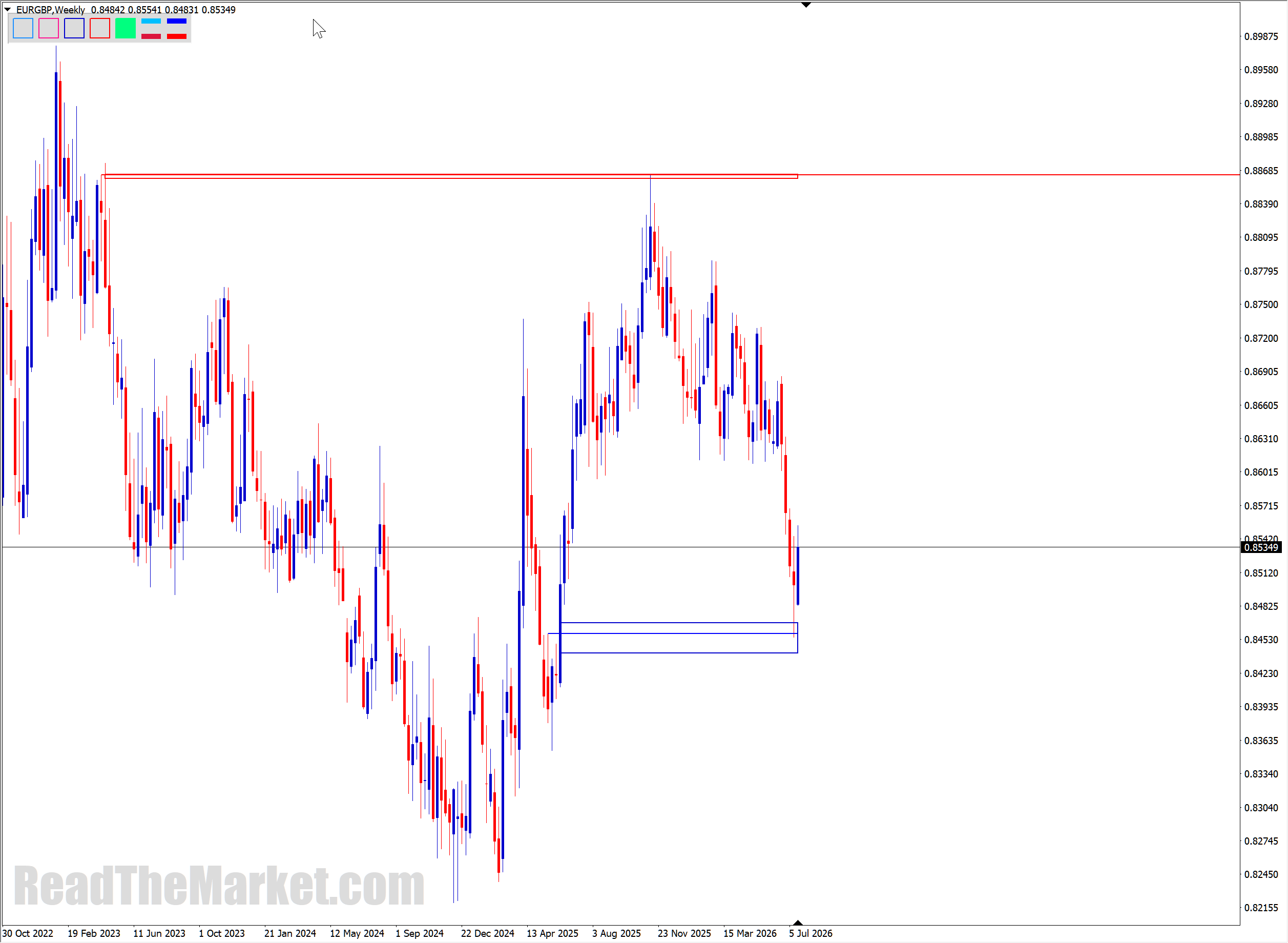
Every chart you’ve been shown is buried under indicators — each one a lagging repackage of the price already in front of you. We remove all of them.
What’s left is a line and a box, and the harder skill they demand: learning to see when there is nothing to do, and doing nothing.
You can read price perfectly and still lose. Trading isn’t a knowledge problem — it’s a character one.
Learn this and you’ll see what price is set up to do next. That won’t make you profitable on its own — most people who read it perfectly well still lose, and no course fixes that. We teach the reading. What you do with it is yours.
So the community is built around the same honesty: real charts, marked up in public, wins and losses shown as they happened. And we ask one thing of every member who was helped along the way — help the members who come behind them. It’s the only way education in a community perpetuates itself.
Losing is not a fault you can debug out of trading. It is the condition of the work. Dhamma, drawing on the eastern philosophies he studies, helps our members stay whole while they trade — not a trick that makes profit follow once your head is right, but a practice for bearing your own self without breaking you, or your account.
Almost no one in this business teaches that part honestly.
Everybody with an interest in trading is welcome, whatever their experience or background. Complete beginners especially — arriving with nothing to unlearn is an advantage. Great traders are found in every walk of life, every age, and any gender, and most of them have no idea of it.
No signals. No trade calls. No returns claims. No upsells. And if you’re here to gamble, please stay away — the market will always give a gambler what they’re really after, which is a way to lose.
The lessons in Markepedia, the members’ forum where your charts get read, and coaching on your own reads — no tiers, no upsells, no “founding price” that resets every time you reload. The indicator is a separate thing: a drawing tool for people who already know the method. The membership doesn’t need it, and it teaches you nothing.
RTM’s vocabulary is precise on purpose, and it doesn’t change. QM is QM. FTB is FTB. A Diamond is a Diamond wherever you’re reading from — that’s the point of naming structures instead of describing them.
Everything around those words is being translated. The lessons, the explanations, the forum. So that the structure is the hard part, and the language isn’t.
The language switcher is at the top of every page. If your language isn’t there, ask and we will add it. If it is there but reads badly, tell us — the translation is machine-made, so it gets the shape right and the judgement wrong. We would rather hear from one reader who knows the difference than add another language nobody has checked.
Open a chart, mark one line, and wait for price to prove you right or wrong. That’s the method in a sentence — the rest is learning to sit with it. If you’re not ready yet, that’s fine. We’ll be here.
 English (UK) English (UK)
  فارسی
فارسی
 العربية
 Français
 Deutsch
 Bahasa Indonesia
 Español